Journal — StormNet
From the sidewalk to the StormNet field test
The January 2026 prototype brought cameras, maps, thermal exploration, and observations into one research surface.
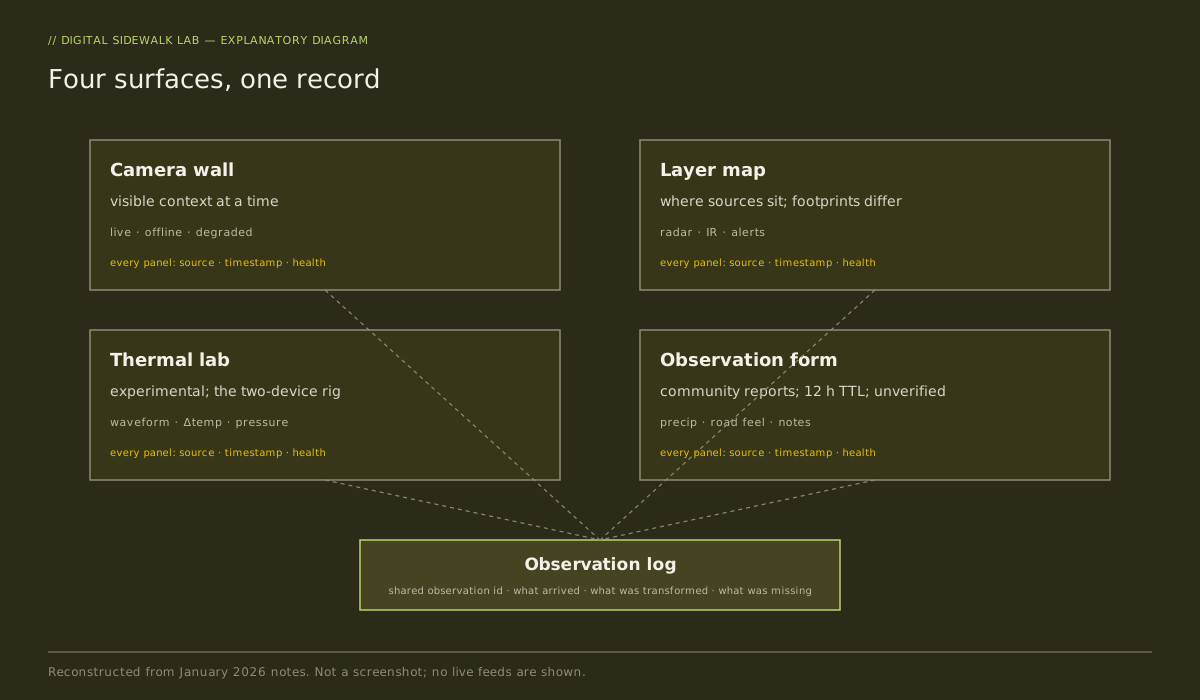
In January 2026 the Lab built its first instrument for the outdoors. The planning notes called it Digital Sidewalk Labs — StormNet Field Test 2026. The framing was citizen observation and research. The project was not designed as an emergency dispatch service, a rescue coordination board, or a substitute for official weather information, and the console says so on every screen.
Four ways into a place
The specification described four surfaces. A camera wall gave visible context: what a view appeared to show at a particular time. A layered map added spatial context, with radar, infrared, and alert overlays that could be toggled. An experimental thermal lab panel showed sensor readings from a two-device rig. An observation form let visitors report precipitation type, road feel, and notes, with each report expiring after twelve hours and marked unverified by default.
The notes also specified a Clemson sensor-lab view with indoor and outdoor context, waveforms, temperature differences, and logs. Camera sources were to carry a health state, live, offline, or degraded, so that a stale image could never pass as an unchanged sky.
What was built
The console was deployed on Cloudflare Pages and remains live at its original address. It renders in the browser from JavaScript, which is why a plain text fetch of the page returns only its title. A companion sensor app, built in React Native with Expo, ran on two devices and posted readings to a small ingest service. The next entries describe that rig and what it recorded.
The surviving notes do not establish that every camera source stayed live, that every measurement was calibrated, or that every proposed feature was completed. Later ideas for broader city coverage remain design proposals.
The name
StormNet was a working name. In September 2026 it was retired into Digital Sidewalk Lab, which now holds the map, the intake, and the open-source plan. The original address keeps the StormNet title for continuity until the console moves to this domain. The archive keeps the name too, because a record that renames its own past is harder to trust.