Journal — Method
Missing is part of the map
No observation, a late observation, and a restricted observation are different things. A useful system says which one it means.
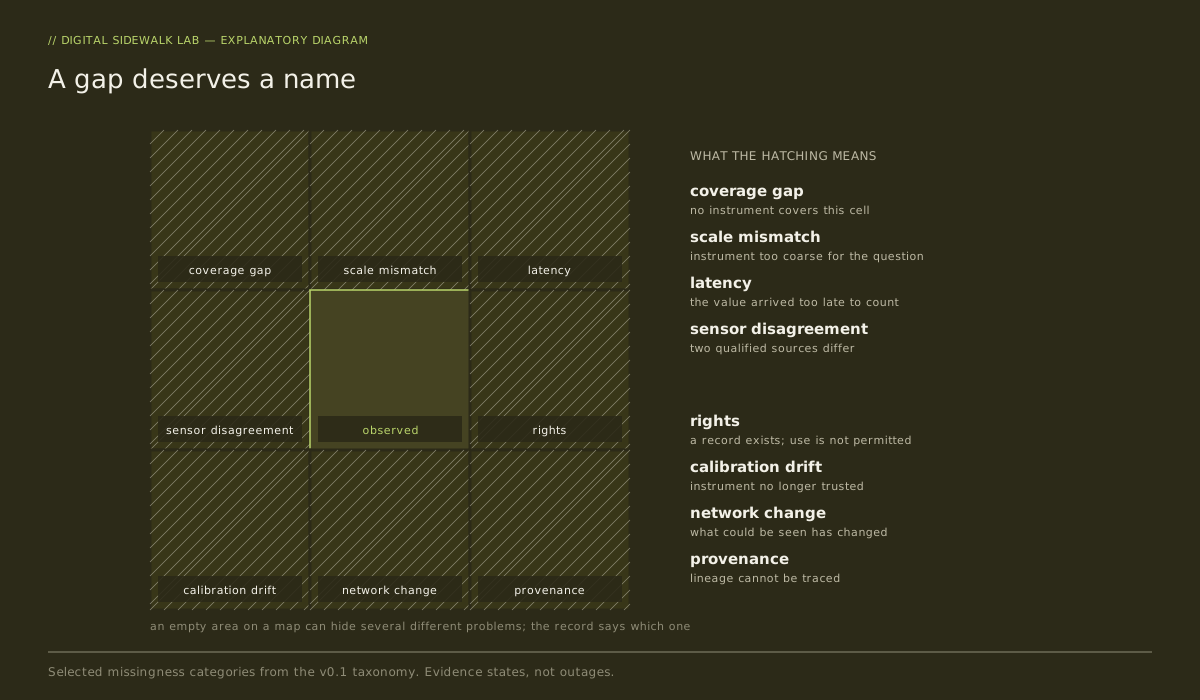
An empty area on a map can hide several different problems. No instrument may cover it. An instrument may exist but be too far away, too coarse, or temporarily unavailable. Data may have arrived too late. A record may exist but lack permission for the intended use.
Do not paint every gap the same color
The August archive makes these differences explicit through a missingness taxonomy. Its vocabulary includes coverage gaps, scale mismatch, sensor disagreement, uncertain references, calibration drift, network change, latency, provenance, and rights. Each is a reason a value is absent or untrustworthy, and each calls for a different response.
A disagreement is information
When two qualified sources disagree, replacing them with one unexplained average conceals the question that needs attention. The disagreement may arise from different footprints, time windows, instruments, or processing. A record that keeps those distinctions makes the next investigation more precise.
The same principle applies to history. A change in an observing network changes what becomes visible. A longer record does not mean its earlier and later portions had the same ability to detect an event.
Ask what would reduce the uncertainty
The architecture proposes recording a "next measurement": the observation that would best distinguish between the remaining explanations. That is a research design idea, and a later entry in this journal describes an instrument built to answer it. Until an evaluation exists, the defensible accomplishment is the explicit vocabulary and record structure. Making uncertainty legible is already a step toward a more trustworthy map.