Journal — Open source
The platform is open; the detector is a provider
The sensing platform is being released under an open license with a pluggable detection interface. The Lab's own engine plugs into it and is not part of it.
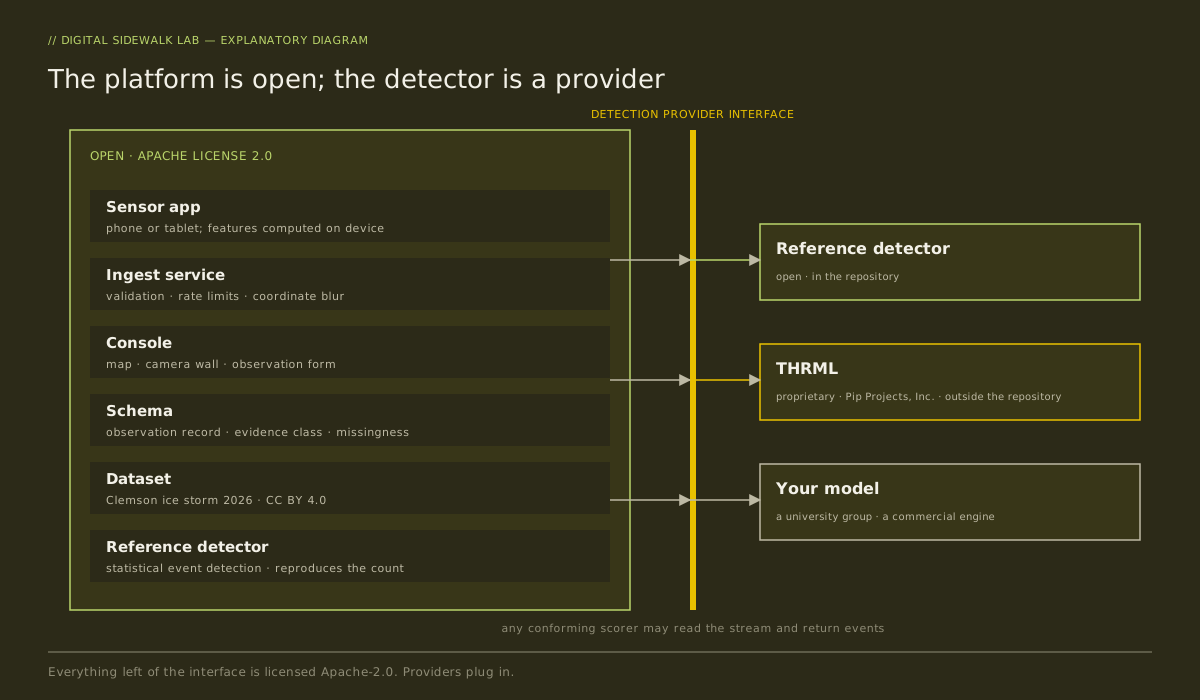
The original January design already had a boundary in it. The Lab's devices were the first nodes; others could contribute feeds; the processing engine that scored those feeds was the Lab's own. In September 2026 that boundary was written into a license.
What is open
The field layer: the sensor app that runs on a phone or tablet and computes features on the device. The ingest layer: a small service that validates packets, blurs coordinates to roughly one kilometer, applies rate limits, and stores samples and observations. The console: the map, camera wall, and observation form. The schema. The published ice-storm dataset. And a reference detector: a plain statistical event detector over the feature stream that reproduces the published event count from the published file.
All of that is licensed under the Apache License 2.0. The dataset is licensed CC BY 4.0.
What is a provider
Detection engines are pluggable. The package defines a Detection Provider Interface: a contract that any scorer must satisfy to read the stream and return events. The open reference detector satisfies it. So does the Lab's proprietary engine, THRML, which is a trademark of Pip Projects, Inc., is not in the repository, and is not required to run the platform. So could a university group's model, or a commercial engine.
This is the same pattern as an open radar viewer that consumes the output of a closed numerical weather model. The platform is open; particular inference engines may not be. Stating that plainly is better for the ecosystem than pretending otherwise.
Contributors, in order
The package asks for three kinds of contributors. Field operators who run a node through a storm anywhere; every honest storm-hour is a contribution. Platform developers who add console features, sensor sources such as transportation-department cameras and home weather stations, and ingest hardening. And detection researchers who implement the provider interface and benchmark against the published dataset.
Status
The package is prepared and documented: contributing guide, governance, security and disclosure policy, roadmap. Public release of the repository is the next step, and this entry will be updated with the address when it is live. The Lab's stated target for the platform is a submission to the National Science Foundation's open-source ecosystems program after a full season of multi-station data in 2027.