Journal — Buildspace — journal entry
The first thing I asked
July 15, 2023. My first conversation with the assistant I have now worked beside for three years was about how to tell what lasts.
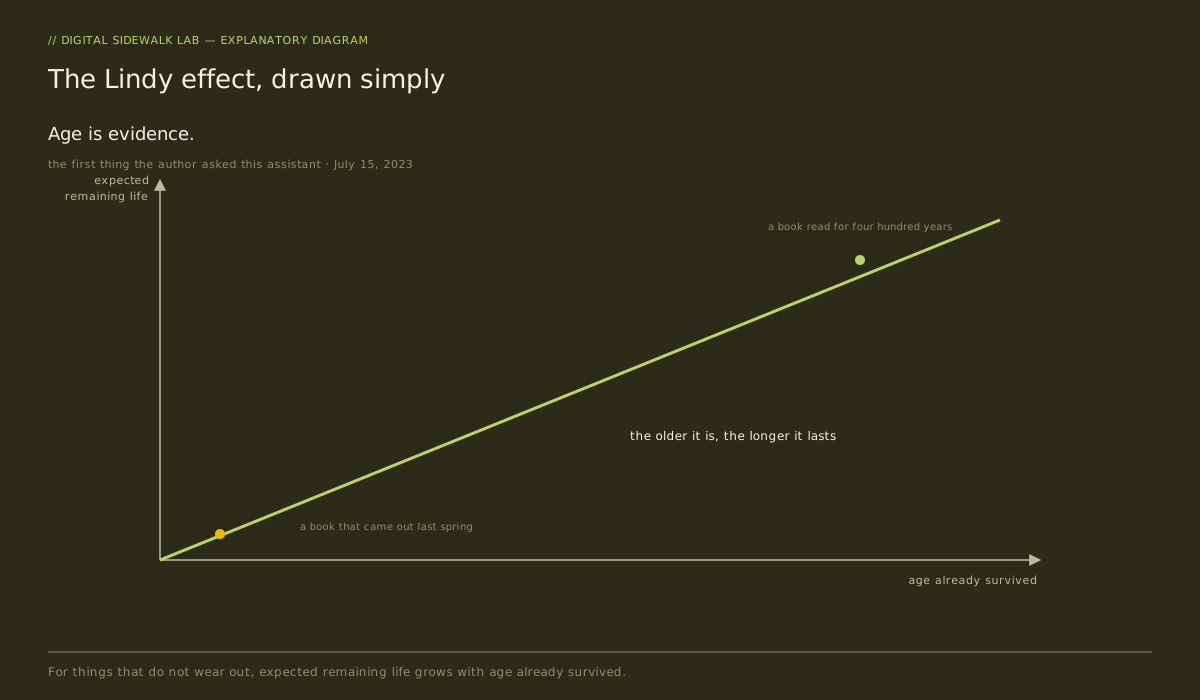
I went and looked. The first thing I ever asked this assistant, three summers ago, was to summarize an article about the Lindy effect and how to use it to choose your next book.
The Lindy effect, defined plainly: for things that do not wear out, like ideas, books, and technologies, the longer a thing has already survived, the longer you should expect it to keep surviving. A book that has been read for four hundred years will probably be read for four hundred more. A book that came out last spring might be gone by fall. Age is evidence.
I was not asking about books. I was three weeks from the start of Buildspace Season 4, a six-week online program where seventeen thousand people were going to try to build something on nights and weekends, and I was going to be one of them while also studying them. I wanted a rule for what to build and what to write about. Something that would still be worth reading when I was done.
The follow-up question I asked that day was what to apply the Lindy effect to that would trend in search. I am putting that here because it is funny and because it is honest. I have always wanted the durable thing and the findable thing at the same time. The joke is that I am now building a website meant to live at one address permanently, three years later, and the rule has not changed.
What passed the test, looking back. Jacobs did. Pask did. Duneier did. The idea that people learn by being around each other did, because it is older than any of them. The particular programs and platforms did not, and the one I studied closed a year later. That is not a failure of the study. It is the study. A framework that only works while its first example is alive is not a framework.
So this is the rule for the journal, written down where I can see it. Write about what will still be true. Date everything. Keep the record even when the thing being recorded is gone.