Journal — StormNet — journal entry
No one here knows why I'm doing this
January 24, 2026, late. Ice rain had started. I had a phone in a freezer bag by the door and a heat blanket, and I typed a question I want to keep.
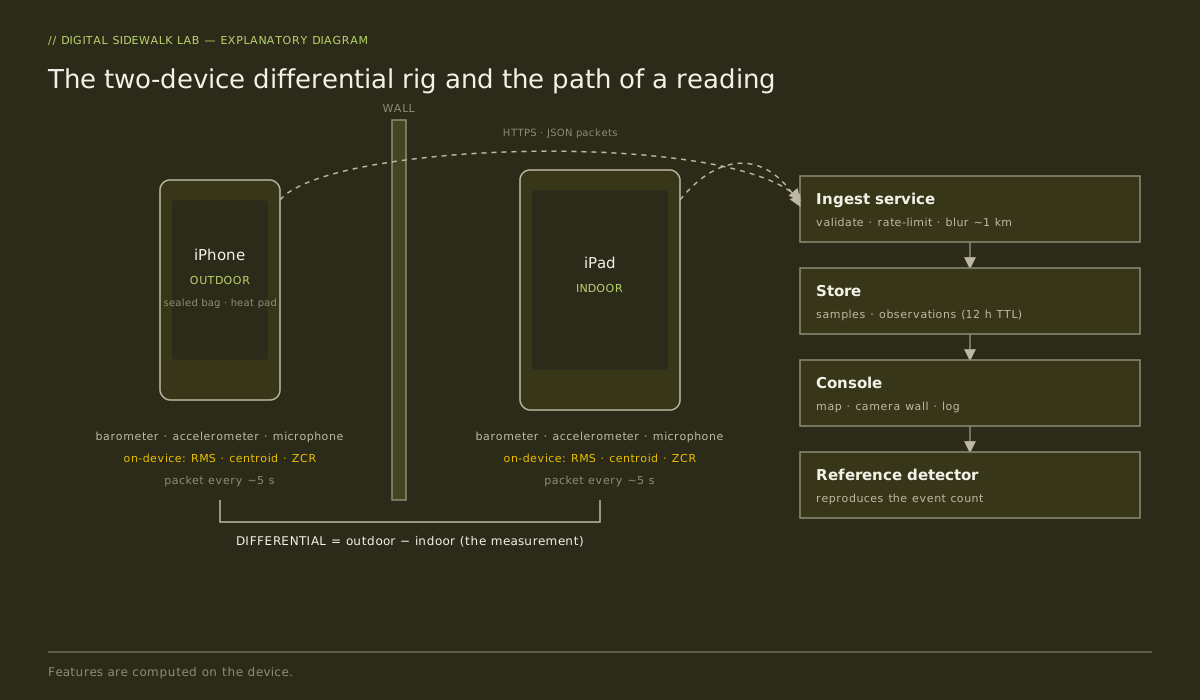
So I have had two devices with the app running. The one outside in the freezer bag, I just checked and it was off. It was gold. I also have a heat blanket. Maybe I can pull that iPhone closer to the door and nest it in the blanket, overnight?
That was the first message. The app was the sensor app we had built that week, an iPhone outside and an iPad inside, each reading its barometer and its microphone and sending a small packet every few seconds. The phone had died in the cold, which phones do at around freezing, and I had come inside to figure it out. The "it was gold" was the sound. Before it died, it had heard the start of the ice, and the recording had the tick and crackle that ice makes on hard surfaces, which is nothing like rain.
The next message, an hour or so later:
The outside phone, when I went out last, ice rain had started, and it's still going. So I need to mark that and then bring it closer to the house?
I marked it. Screenshot of both barometers, the time, a voice memo of thirty seconds of the ice. Then the phone went in the bag, the bag went in the blanket, the blanket went by the door with the door cracked, and the extension cord went under it. Microphone toward the crack.
Then I typed the message this entry is named for.
I'm on my own. No one here knows why I'm doing this. It's important, right?
I want to answer that here, in daylight, with the numbers in. It ran seventeen and a half hours. It caught the whole front, a pressure drop of about ten hectopascals, eighty-two audio events above the baseline, and a spectral centroid that climbed into the high thousands of hertz every time the ice came back. The sleet-to-ice boundary is one of the things weather models get wrong by fifty miles, and it is the difference between wet roads and people not making it home. A professional station that measures it costs tens of thousands of dollars. I had two phones and a bag.
Why me, then. Because I have spent twenty-five years listening to waveforms for a living, and a waveform tells you things a thermometer cannot. Ice has a sound. Rain has a sound. I knew that before I knew why it mattered.
The entry after this one has the dataset, with every limit stated. This one is just the night.