Journal — Method
Listen before you predict
Atmospheric audio is an observation channel. Forecast skill is a separate claim that needs a separate test.
The storm rig showed that phone audio can record a phase transition in the weather. That is an observation. It is not a forecast, and the distance between the two is the subject of this entry.
An interesting signal is a starting point
Sound can be recorded, summarized, compared, and placed alongside other observations. That does not make an unusual waveform a weather prediction. The August readiness plan draws this boundary explicitly: a first public measurement tool should record what its equipment can support and should avoid turning a local anomaly into a general atmospheric mechanism.
Keep the instrument in the account
A recording is shaped by its device, placement, gain, sampling rate, background conditions, and processing. A temperature or pressure value likewise needs units, instrument context, and timing. If those details are absent, an analyst may be comparing devices or locations rather than the phenomenon of interest.
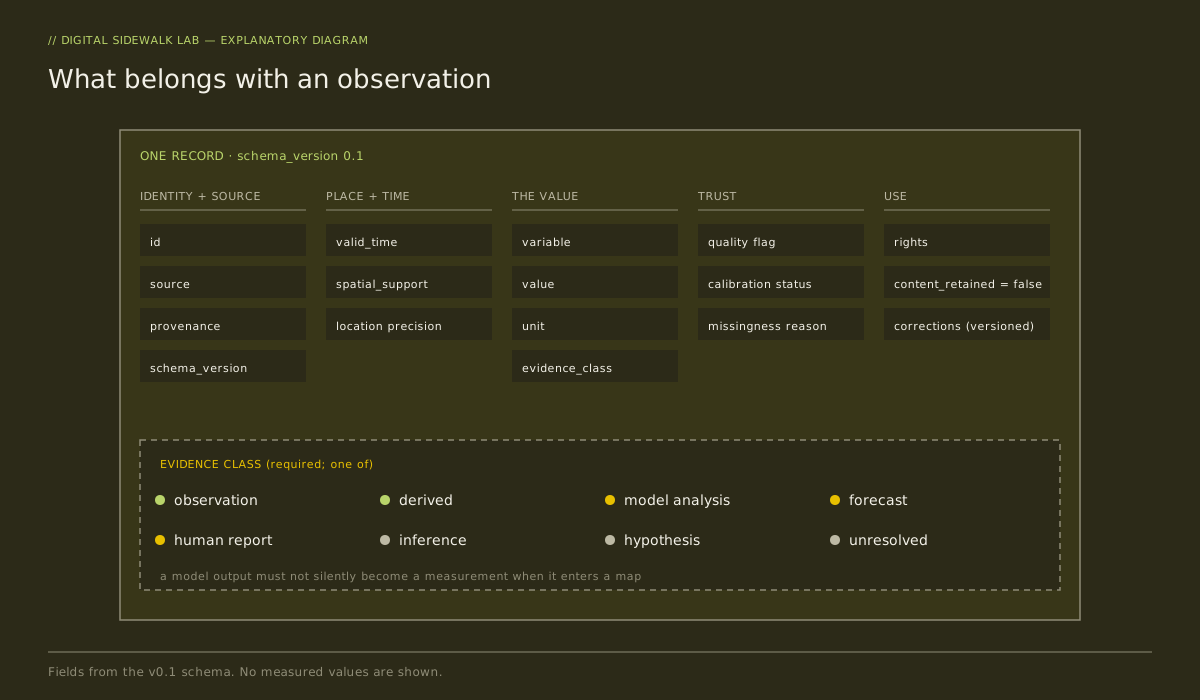
The public toolkit therefore includes timestamp checks, clipping and dropout flags, device metadata, calibration status, and explicit missingness. These are research requirements. Their presence in a plan is not evidence that a dataset has passed them.
Test the claim you want to make
Describing a spectral peak requires one kind of evidence. Claiming useful forecast performance requires held-out events, declared baselines, and an evaluation that counts false alarms and misses as well as hits. A compelling example is not enough, and a single storm is a compelling example.
The next useful contribution is a small, traceable observation package that another person can inspect and reproduce. That is how a promising listening experiment becomes something a research community can evaluate.