Journal — StormNet
Four surfaces, one observation problem
A camera wall, a map, a thermal view, and a log each answer a different question. None is the whole story.
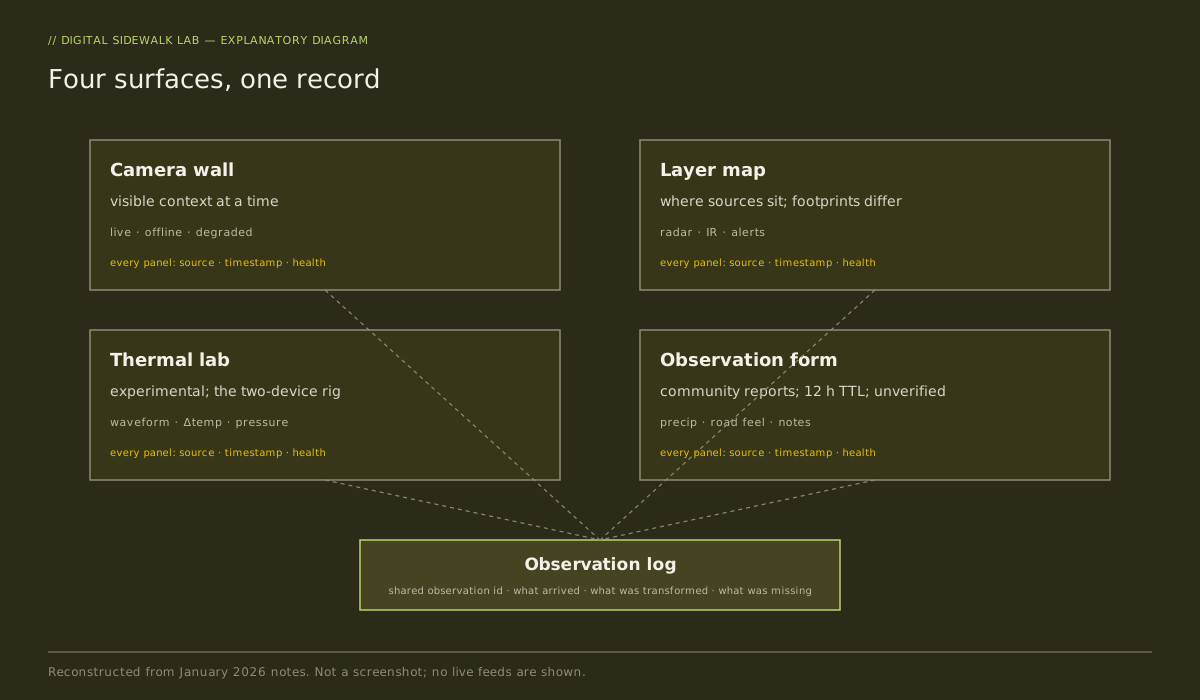
The four surfaces of the field-test console look like one dashboard. They are four different kinds of evidence, and the design's main job was to keep them from being confused for one another.
Seeing is not measuring
The camera wall shows what a view looked like at a moment. A camera image cannot establish the calibration, coverage, or meaning of a sensor reading taken nearby. It is useful and incomplete, and the interface should say both.
The map adds where. It helps a reader see which sources refer to the same place and which do not. A nearby observation is not automatically a measurement of the location under discussion; the footprint of a radar cell, a webcam, and a phone barometer are three different sizes.
An experimental panel needs a record
The thermal-lab panel was explicitly experimental. Its role was inspection and comparison, not making a visual effect look like a validated atmospheric explanation. Temperature differences, audio summaries, and any derived feature need their own source, units, time interval, and method.
That is why the observation log is the surface the others depend on. It is where a reader can inspect what arrived, what was transformed, what was missing, and what a reviewer could establish.
Health is part of the information
The notes proposed live, offline, and degraded states for every camera source. The absence of a current image must not look like an unchanged environment. A stale image needs to be identifiable as stale.
A future version connects the four surfaces through shared observation identifiers and visible timestamps, so a reader can move from a picture to the record behind it. This entry records the design logic; it does not claim that those connections were fully implemented in January. The open-source release described later in this journal is where they are being built properly.